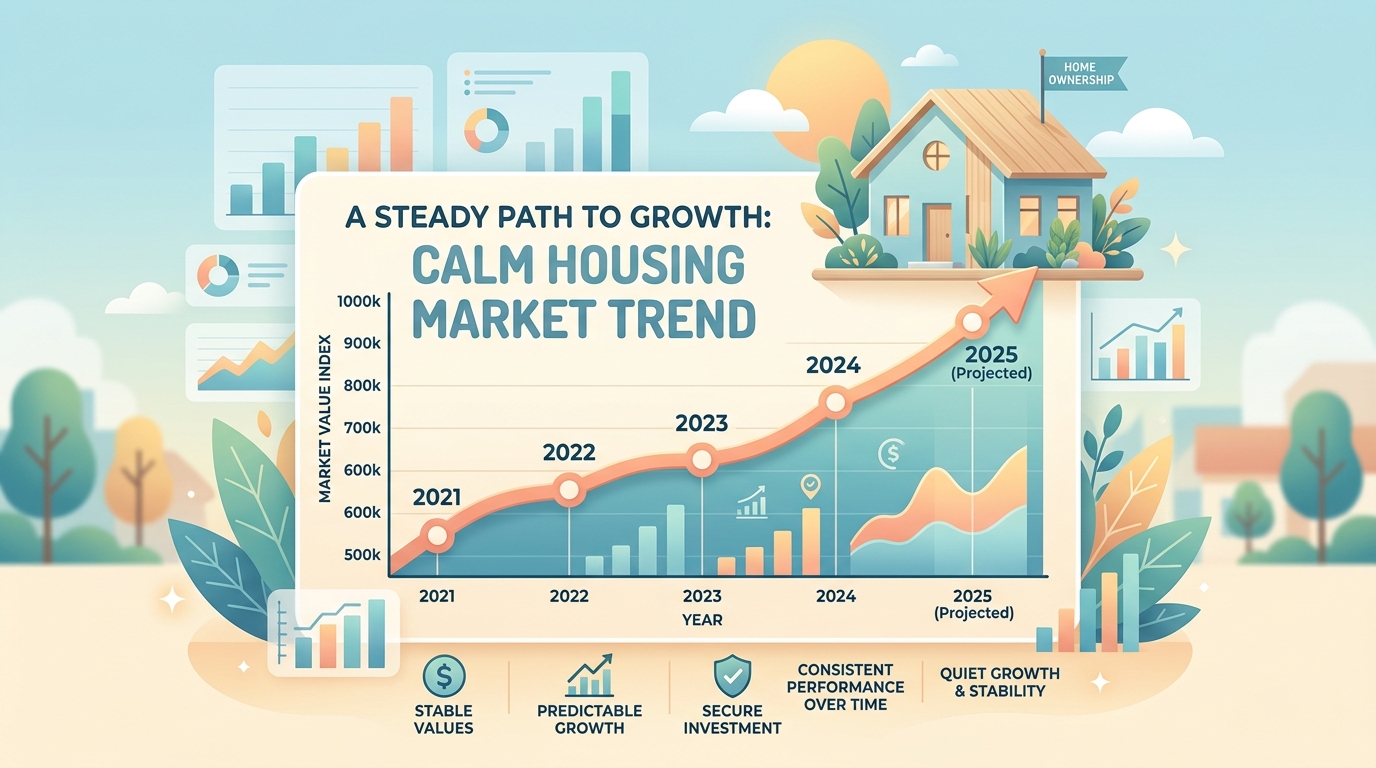
If you’ve been watching the news lately, you may be wondering: Are we heading toward another housing crash?
It’s an understandable concern.
Mortgage rates remain elevated, buyers are feeling the pressure of higher monthly payments, and home sales have been slower than many people would like. Headlines about the economy can make the situation feel even more uncertain.
But there’s an important distinction between a slower housing market and a housing crash.
And when you look at the numbers, today’s market doesn’t look like a repeat of 2008.
Today’s Market Is Challenging - but That Doesn’t Mean It’s Crashing
The housing market has certainly cooled.
In July 2026, existing-home sales declined 1.7% from the previous month to an annualized rate of 4.06 million homes. At the same time, the national median existing-home price was $434,100 - still 2% higher than a year earlier.
That tells us something important:
Sales activity can slow without home values suddenly collapsing.
Buyers are dealing with affordability challenges, while many homeowners are choosing to stay put rather than give up the historically low mortgage rates they secured several years ago.
That creates a market that feels frozen in many areas - but frozen is not the same thing as crashing.
Why 2008 Was So Different
To understand why today’s market is different, it helps to remember what caused the housing crisis of 2008.
The financial crisis involved widespread risky lending, loose mortgage qualification standards, excessive leverage and a large number of homeowners who were unable to make their payments.
That combination created a wave of distressed properties entering the market at the same time.
Today’s homeowners, by comparison, generally have much more equity in their homes, and the mortgage market is fundamentally different from the one that existed before the 2008 crash.
That doesn’t mean prices can’t decline in individual markets. They can.
It means we shouldn’t automatically assume that a slowdown in sales will turn into another 2008-style collapse.
Inventory Matters
One of the biggest things to watch when evaluating the possibility of a housing crash is supply.
A dramatic price crash generally requires a large imbalance between the number of homes for sale and the number of buyers willing and able to purchase them.
But inventory remains relatively constrained in many parts of the country.
In July, the number of existing homes available for sale actually declined 1.9% from June to approximately 1.54 million homes.
That’s very different from a situation where millions of distressed homeowners are simultaneously flooding the market with properties.
In fact, one of today’s biggest housing-market problems is still a shortage of desirable homes in many locations.
Homeowners Have a Lot of Equity
Another major difference from the last housing crisis is homeowner equity.
Many homeowners today have substantial equity because home values increased significantly over the past decade.
That gives homeowners more financial flexibility and provides an important cushion if the market slows.
It also means that a homeowner who needs to sell isn’t necessarily in the same position as someone who bought a highly leveraged property immediately before the 2008 crash.
What About Foreclosures?
Foreclosures have increased from the unusually low levels seen in recent years, so they are something worth monitoring.
But an increase in foreclosure activity doesn’t automatically mean a housing crash is coming.
The more important question is whether foreclosures become widespread enough to create a major oversupply of homes.
So far, the broader market doesn’t resemble the enormous distressed-inventory problem associated with the housing crisis of 2008.
The Bigger Problem Right Now May Be Affordability
If there is one issue that deserves serious attention, it may not be a housing crash at all.
It’s affordability.
Mortgage rates remain around the high-6% range, making today’s monthly payments substantially more expensive than they would have been when rates were near historic lows.
That has caused many potential buyers to pause.
At the same time, homeowners who already have attractive mortgage rates may have little incentive to sell.
The result?
Fewer transactions.
That’s why today’s market can feel very different from the fast-moving market we saw several years ago.
What Does This Mean for Home Sellers?
If you’re thinking about selling your home, don’t let national headlines make the decision for you.
Real estate is ultimately local.
The market for a particular home depends on factors such as:
- Location
- Price range
- Condition
- School district
- Inventory
- Buyer demand
- Recent comparable sales
- How the property is marketed
A well-priced, properly prepared home can still attract strong buyer interest - even when the overall market is slower.
But today’s market does require sellers to be strategic.
Overpricing and waiting for yesterday’s market to return can cost you more than pricing correctly from the beginning.
What Does This Mean for Westchester County Homeowners?
For homeowners in Westchester County, national housing statistics are useful - but they don’t tell the entire story.
Your home’s value is determined by what buyers are willing to pay for your property in your specific neighborhood.
That’s why a local market analysis is much more useful than simply looking at national headlines.
A professional analysis should consider recent sales, current competition, pending transactions, price reductions, days on market and the unique features of your home.
The goal isn’t to predict the future perfectly.
The goal is to understand what the market is telling us today and use that information to make a smart decision.
Don’t Make a Major Decision Based on a Headline
It’s easy to become nervous when you hear the words “housing crash” repeatedly.
But the numbers tell a more nuanced story.
Today’s housing market has real challenges. Buyers are facing affordability pressures. Mortgage rates remain elevated. Sales activity is slow. And some markets are experiencing price adjustments.
But those conditions are not automatically the same thing as a housing collapse.
For homeowners considering a move, the most important question isn’t:
“Is the entire U.S. housing market going to crash?”
A better question is:
“What is happening in my local market, and what does that mean for my home?”
That’s where good information - and a knowledgeable local real estate professional—can make a difference.
Thinking About Selling?
If you’re a homeowner in Westchester County and you’re wondering what your home could realistically sell for in today’s market, I’d be happy to help you understand the numbers.
A thoughtful pricing strategy, strong preparation and professional marketing can make a significant difference—especially in a market where buyers have become more selective.
Don’t make your next real estate decision based on fear. Make it based on facts.
The information contained, and the opinions expressed, in this article are not intended to be construed as investment advice.